Obstructive Sleep Apnea (OSA)
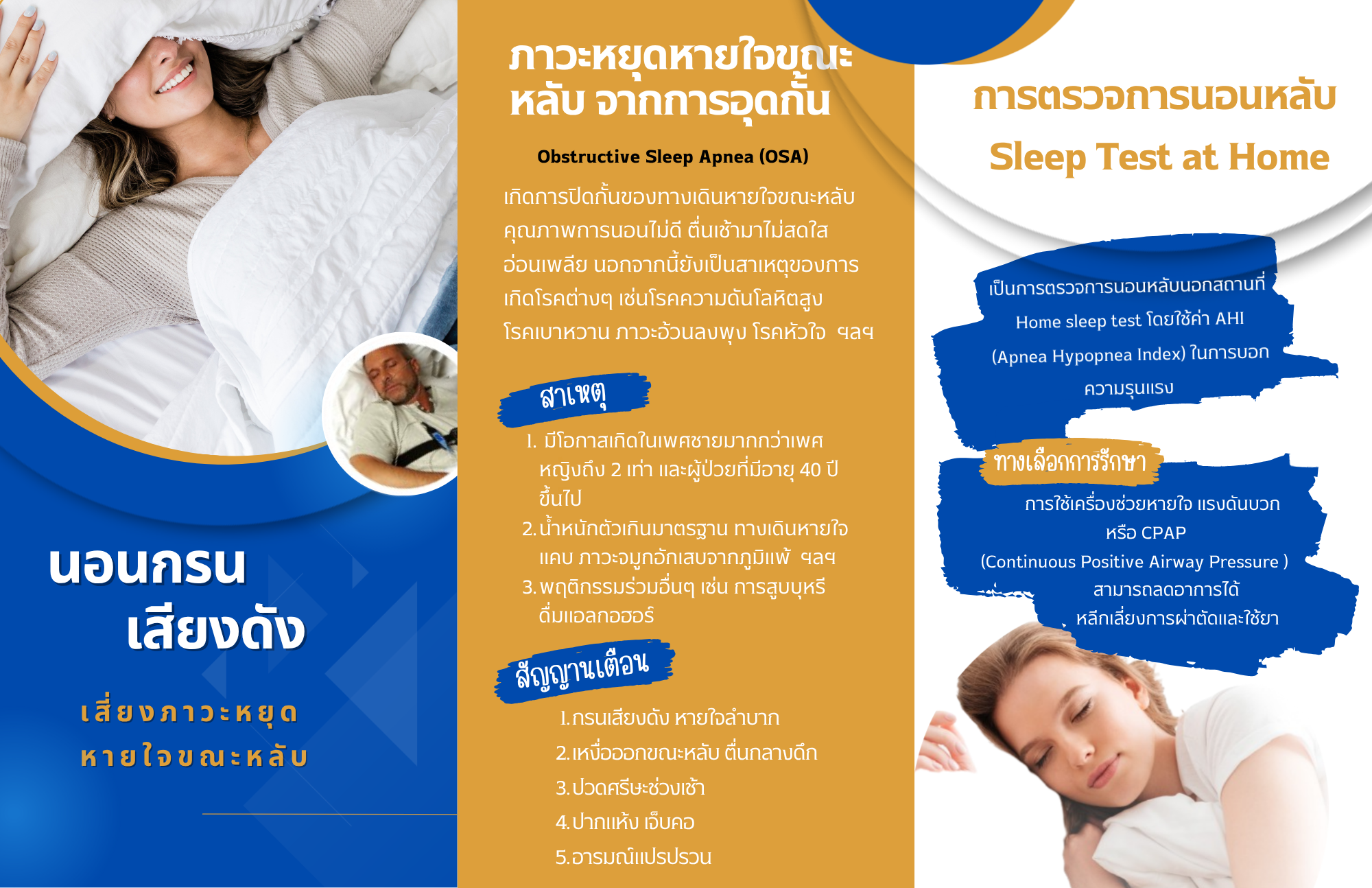
Obstructive Sleep Apnea (OSA) is a condition in which the airway temporarily collapses during sleep, causing repeated interruptions in breathing. This can reduce oxygen levels in the body and disrupt normal sleep quality. Common symptoms include loud snoring, pauses in breathing or gasping during sleep, and excessive daytime sleepiness. If left untreated, OSA may increase the risk of high blood pressure, heart disease, and other health complications. Individuals with these symptoms should consult a doctor or undergo a sleep study (Sleep Test).
Warning Signs of Obstructive Sleep Apnea
- Chronic loud snoring: Snoring more than 3 nights per week
- Interrupted breathing during sleep: Periods of silence followed by gasping, choking, or sudden awakening
- Daytime fatigue: Waking up unrefreshed, morning headaches, or dizziness
- Excessive daytime sleepiness: Feeling unusually sleepy during the day or falling asleep unintentionally
- Other symptoms: Dry mouth or sore throat upon waking
Causes and Risk Factors
- Excess body weight (obesity): Fat accumulation around the neck can narrow the airway
- Body structure: Short neck, enlarged tongue, or small jaw
- Lifestyle factors: Smoking and alcohol consumption, especially before bedtime
- Age: OSA can occur at any age, but is more common in people over 35 years old
Severity of OSA
(Based on the number of breathing interruptions per hour)
- Normal: Fewer than 5 episodes per hour
- Mild: 5–15 episodes per hour
- Moderate: 15–30 episodes per hour
- Severe: More than 30 episodes per hour
Treatment and Self-Care
- Continuous Positive Airway Pressure (CPAP): The standard and most effective treatment
- Lifestyle modifications: Weight loss, regular exercise, and avoiding alcohol or sleeping pills
- Sleeping position: Sleeping on the side may help reduce airway collapse
- Oral appliances: Devices that help reposition the jaw or tongue
- Surgery: Recommended in selected cases when necessary
If you frequently wake up gasping for air or experience severe symptoms, you should consult a healthcare professional and consider undergoing a sleep study (Sleep Test) as soon as possible.