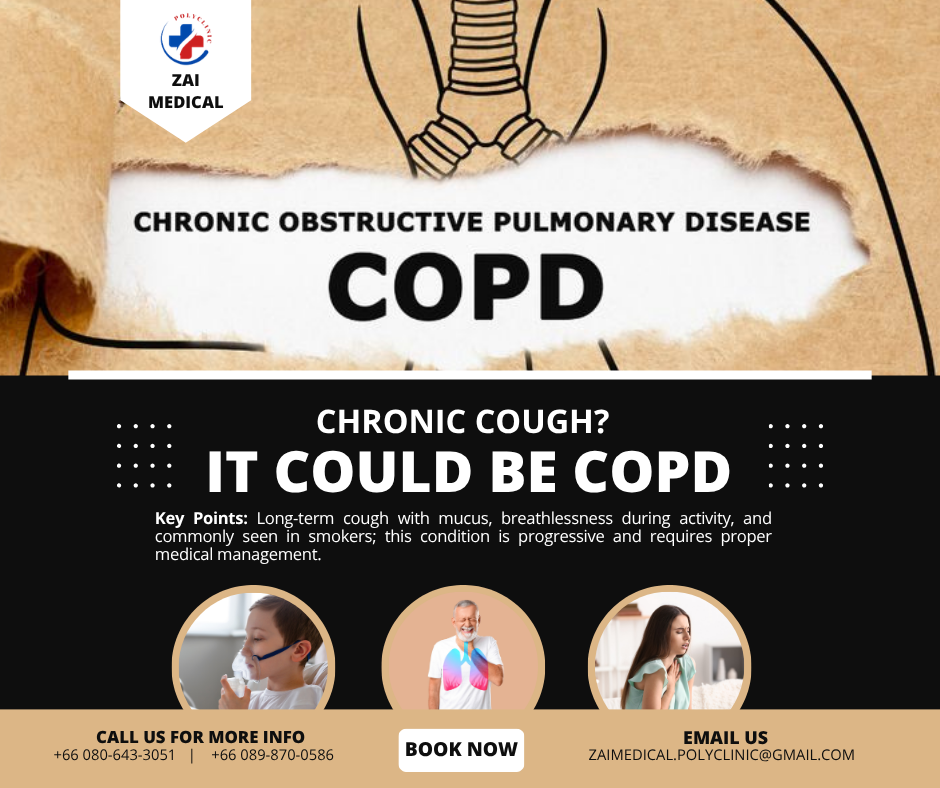
COPD (Chronic Obstructive Pulmonary Disease)
COPD, or Chronic Obstructive Pulmonary Disease, is a group of chronic inflammatory lung diseases that cause airflow blockage and damage to lung tissue. This condition makes breathing difficult and often leads to fatigue and shortness of breath. Common diseases included in COPD are emphysema and chronic bronchitis.
🔍 Main Causes
The most common cause of COPD is long-term exposure to substances that irritate and damage the lungs, including:
- Smoking cigarettes or using e-cigarettes
- Exposure to secondhand smoke
- Air pollution, such as dust, smoke, incense fumes, chemical vapors, and occupational pollutants
🩺 Common Symptoms
Symptoms usually develop gradually and become more severe over time. Important warning signs include:
- Chronic cough with thick mucus or phlegm
- Shortness of breath, especially during physical activity
- Wheezing or a whistling sound while breathing
- Chest tightness
💡 Treatment and Management
Although COPD cannot be completely cured, proper treatment and lifestyle changes can help control symptoms, slow disease progression, and improve quality of life. Treatment options include:
- Quitting smoking and avoiding pollutants:
This is the most important step to prevent further lung damage. - Medications:
Bronchodilator inhalers are commonly used to help open the airways and improve breathing. - Pulmonary Rehabilitation:
A program that includes exercise training and breathing techniques to improve lung function and daily activities. - Oxygen Therapy:
Recommended for patients with severe symptoms or low oxygen levels.