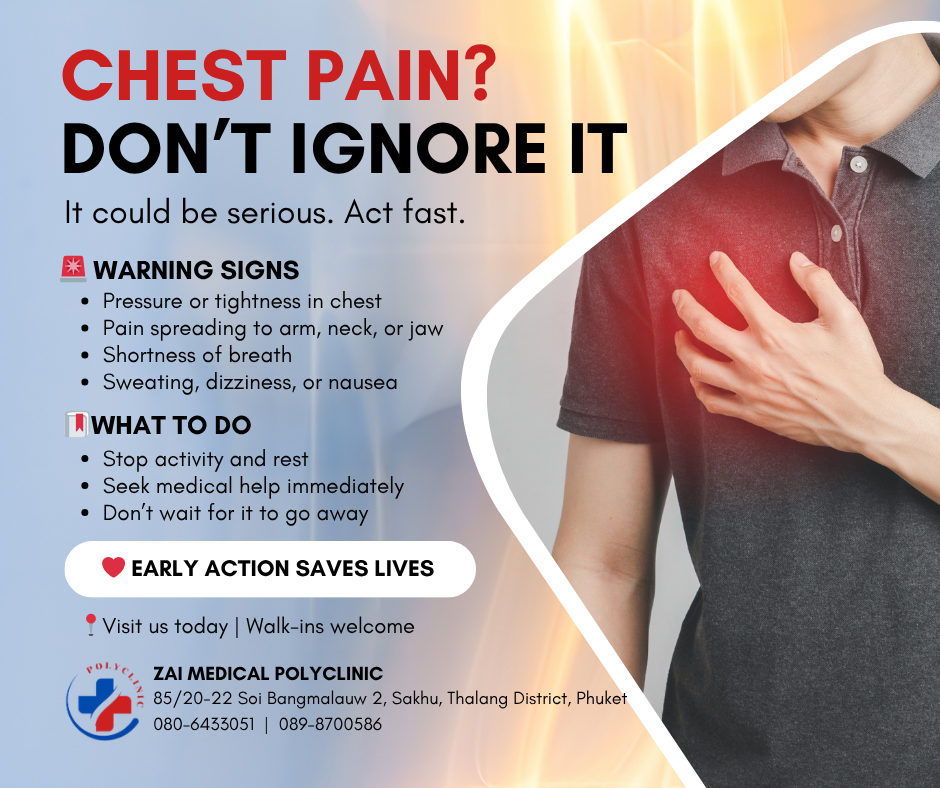
Chest pain refers to any feeling of discomfort in the chest, including pressure, tightness, sharp pain, or dull aching. Although many people immediately associate chest pain with heart disease, it can actually result from a variety of conditions involving the heart, lungs, digestive system, or muscles. Some causes can be life-threatening and require immediate medical attention.
Common Causes of Chest Pain
Heart-related conditions (most serious):
Heart attack (acute myocardial infarction)
Coronary artery disease
Pericarditis (inflammation of the lining around the heart)
These conditions often cause pressure-like chest pain that may radiate to the shoulder or left arm.
Digestive system problems:
Gastroesophageal reflux disease (GERD) causing heartburn
Esophagitis (inflammation of the esophagus)
Lung-related conditions:
Pneumonia
Pulmonary embolism (blood clot in the lungs)
Musculoskeletal causes:
Chest muscle strain or inflammation
Costochondritis or rib inflammation (pain is often reproducible when pressed)
Other causes:
Stress or panic attacks
Emergency Warning Signs
Seek immediate medical attention if chest pain occurs together with any of the following symptoms:
Severe chest tightness, pressure, or burning sensation
Pain spreading to the neck, jaw, shoulder, or left arm
Shortness of breath or difficulty breathing
Excessive sweating, dizziness, or fainting
In summary, chest pain can range from mild and harmless to a serious medical emergency. Persistent, severe, or unexplained chest pain should always be evaluated by a healthcare professional promptly.