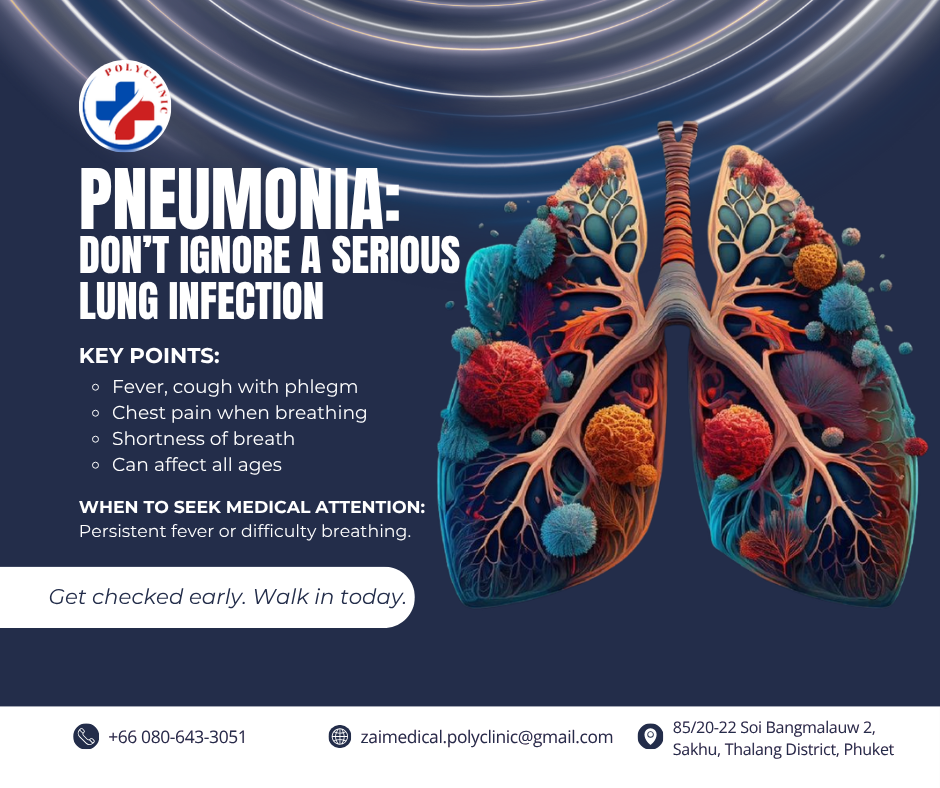
Pneumonia, commonly known as a lung infection, is a condition in which the lung tissue becomes inflamed due to infection caused by bacteria, viruses, or fungi. This results in fluid or pus accumulating in the air sacs (alveoli) of the lungs, leading to symptoms such as high fever, cough, shortness of breath, and reduced oxygen levels in the blood.
🔍 Common Symptoms
Respiratory symptoms:
- Dry cough or cough with green, yellow, or blood-tinged sputum
Physical signs:
- High fever with chills
- Rapid breathing or difficulty breathing
- Chest pain when breathing deeply or coughing
Other symptoms:
- Fatigue
- Loss of appetite
- Body aches
- Nausea or vomiting
⚠️ High-Risk Groups for Severe Complications
Pneumonia can become life-threatening, especially in the following groups:
- Young children and older adults
- Individuals with chronic medical conditions such as heart disease, diabetes, asthma, or chronic obstructive pulmonary disease (COPD)
- People with weakened immune systems or those taking immunosuppressive medications
🩺 Diagnosis and Treatment
Diagnosis:
Doctors usually diagnose pneumonia through medical history taking, physical examination, lung auscultation, chest X-ray, and blood tests such as a Complete Blood Count (CBC).
Treatment:
Treatment depends on the underlying cause. If the infection is bacterial, antibiotics are prescribed. Supportive care may also include fever reducers, expectorants, oxygen therapy, and hospitalization in severe cases.
🛡️ Prevention
- Receive pneumococcal and annual influenza vaccinations
- Avoid close contact with individuals who have respiratory infections
- Wash hands regularly and maintain good overall health